

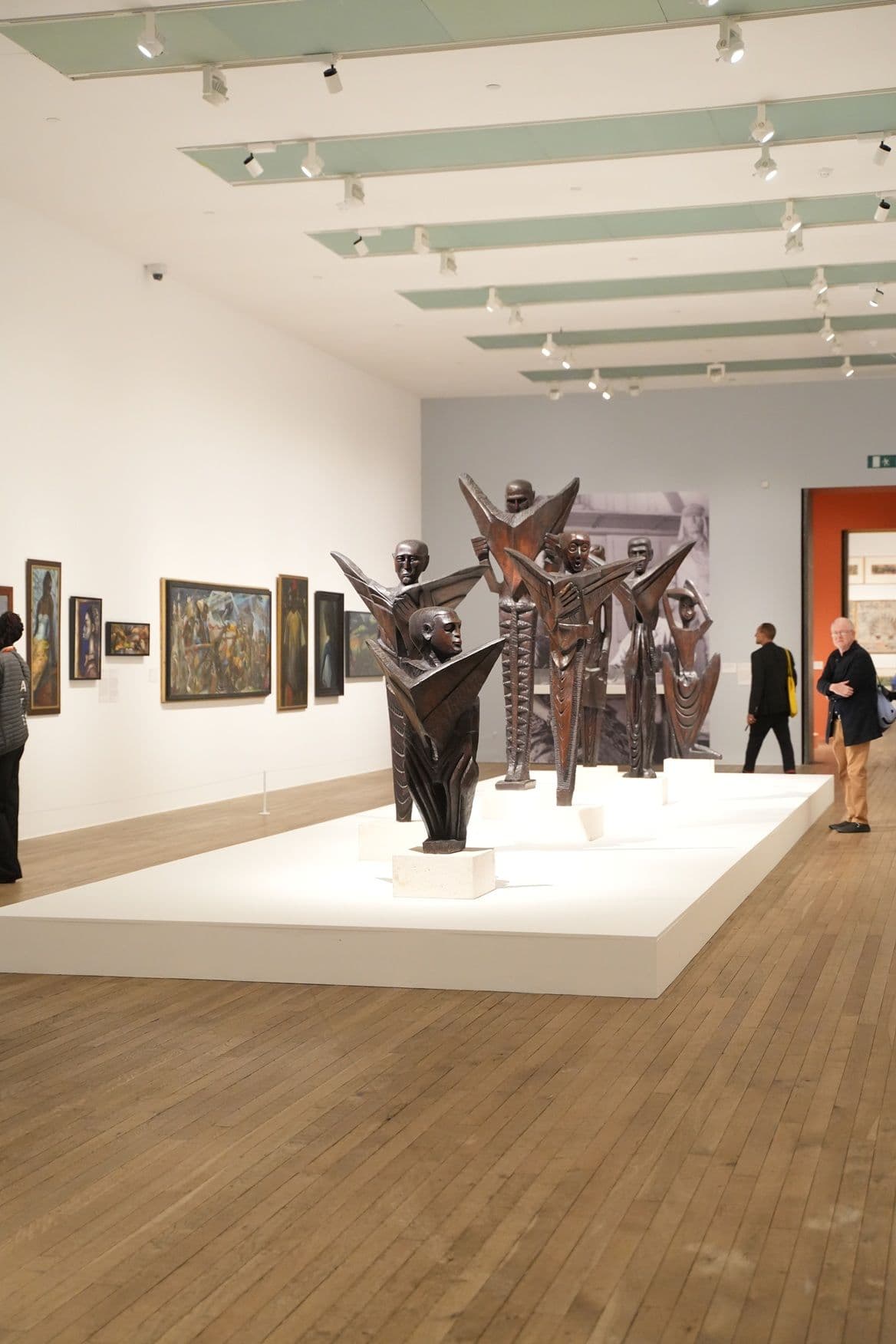
Access Holdings Plc and Coronation Group commemorated World Art Day through a landmark virtual session held in partnership with Tate Modern, one of the world’s leading cultural institutions. The event, titled, “In Conversation with Osei Bonsu: Inside Nigerian Modernism,” spotlighted the global significance of Nigerian modernism and reinforced a shared commitment to democratising access to art.
The session brought together staff members across Access Holdings and Coronation Group, reflecting strong institutional engagement with arts and culture as a critical pillar of societal development. The session featured a virtual tour of the Nigerian Modernism exhibition, followed by an insightful conversation between Osei Bonsu, Tate Modern Curator, and Daniel Wallis, Educator at Tate Modern, offering participants a unique depth into the evolution of modern art in Nigeria.
Opening the session, Ngozi Akinyele, Chief Communications and Marketing Officer of Coronation Group, emphasised the enduring value of art in shaping society and identity: “We recognise that true wealth of a nation lies in three forms of capital- financial capital, cultural capital, and intellectual capital as championed by Aigboje Aig-Imoukhuede CFR, Chairman, Access Holdings and Coronation Group. While financial capital builds prosperity, cultural and intellectual capital give that prosperity meaning. One strengthens institutions, while the other shapes identity and inspires dialogue. At Coronation Group and Access Holdings, we share a conviction that access to art must be democratised, it should be for all, not a select few.”
A central focus of the conversation was on the Nigerian Modernism exhibition, which traces the development of modern art in Nigeria throughout the 20th century, highlighting pioneering artists who established schools, collectives, and new artistic movements that transformed artistic expression in the country.
Importantly, the discussion underscored how Nigerian Modernism emerged from the country’s rich ethnic and cultural diversity. Artists drew from a wide range of indigenous traditions, languages, and worldviews, blending them with global influences to create distinctly Nigerian forms of modern art. This plurality not only shaped the aesthetics of the movement but also challenged narrow, Eurocentric definitions of modernism.